
Ayyappa Satsang with Br. Ramanand
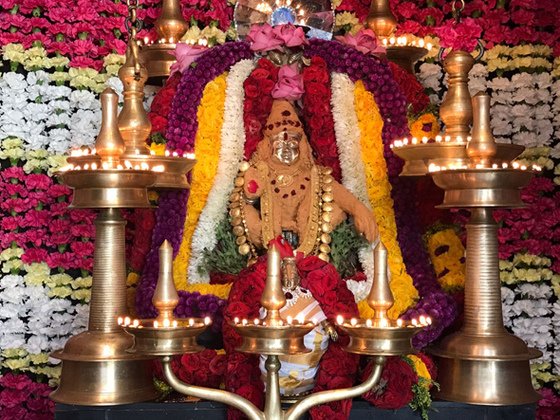
Ayyappa Satsang with Br. Ramanand
A special satsang honouring Lord Ayyappa, led by Amma's longtime monastic disciple, Br. Ramanand. The satsang will include:
- Chanting of Lord Ayyappa's 108 names
- Ayyappa Abhishekam
- Ayyappa Kavacham
- Padi Pattu
- Ayyappa Namaskaram
- Harivarasanam
- Amma Arati
- Meditation
Vegetarian dinner to follow at 4PM.
About Lord Ayyappa
Lord Ayyappa is a symbol of religious unity and communal harmony. He came down to earth to free his devotees from the clutches of demon Mahishi. Lord Ayyappa enshrined in the Sabarimala temple combines both Vishnu and Shiva in one Divinity, and as such He is worshipped both as Protector and Deliverer.
Sabarimala (Mount Sabari - about 3000 feet above sea level) is a favorite and highly significant temple in Kerala, that is only open at certain times of year (mid-November to mid-January, and for the first five days of each Malayalam month). Sabarimala temple is open to all, irrespective of caste, creed, religion, social status or nationality. Pilgrimage to this temple symbolizes the journey to heaven. The journey of a spiritual candidate to Sabarimala is difficult and adventurous. The pilgrims observe severe austerities, wearing rudraksha or tulsi beads strings in the neck and trek up the dense forest filled with wild animals to reach the temple. The pilgrims undergo 41 days of fast to cleanse the mind. They carry on their head, the holy ghee for the Lord's Abisheka (A ceremonial bath performed in the worship of a Deity) filled in coconut in an "Irumudi" (two compartment cloth bag). The feeling of delight and spiritual elevation one gets when devotees have the darshan of the deity is remarkable and significant. The magnetic charm is so high, it makes any devotee, who undertakes the yatra (pilgrimage) once, want to revisit the shrine every year in quest of spiritual solace.
The Pathinettapadi (18 divine steps) to the sanctum sanctorium are highly revered. Every Ayyappa devotee, before he sees the Sanctum Sanctorum, has to lay his footsteps over eighteen sacred steps. The first five steps symbolise the five human senses (Panchendriyas) i.e. visual (vision), auditory (hearing), olfactory (smell), gustatory (taste) and tactile (touch). These signify the `mortal’ nature of one’s body. The next eight steps symbolise the eight Ashtaragas viz, Kama, Krodha, Lobha, Moha, Madha, Maltsarya, Asooya, Dhumb (Love, Anger, Avarice, Lust, Pride, Unhealthy Competition, Jealousy and Boastfulness). The next three steps stand for three Gunas or Thrigunas (nature-born qualities) i.e. Sattva, (perspicuity, discernment) , Rajas (activity, enjoyment) and Tamas (inactivity, stupor). The last two steps represent Vidya (Knowledge) and Avidya (Ignorance).